How to Manage Outdoor Security Lighting Glare: A Strategic Guide
The paradoxical nature of illumination is nowhere more evident than in the realm of outdoor safety. While light is the primary tool for deterring unauthorized access and ensuring navigable paths, its misuse often results in a phenomenon that actively undermines the very security it intends to provide. How to Manage Outdoor Security Lighting Glare. Excessive brightness, poorly directed beams, and high-intensity sources create “disability glare”—a visual condition where the contrast sensitivity of the human eye is diminished by a stray light source. This creates deep, impenetrable shadows where intruders can remain undetected, effectively turning a security asset into a strategic liability.
Mastering the balance between visibility and visual comfort requires a departure from the “brighter is better” philosophy that has dominated residential and commercial lighting for decades. Effective security lighting is not about the volume of lumens produced, but rather the precision of their delivery. As we move toward more integrated and intelligent property management systems, the ability to control light spill and intensity becomes a core competency for property owners, architects, and security professionals alike.
This investigation provides a rigorous editorial examination into the physics, psychology, and technical application of light control. We will explore the systemic shifts in lighting technology—from high-pressure sodium to solid-state LED—and how these changes have altered the landscape of light pollution and visual interference. By dissecting the methodologies used to mitigate visual harshness, this article serves as a definitive reference for those seeking to enhance safety without sacrificing the aesthetic or environmental integrity of their surroundings.
How to manage outdoor security lighting glare
To effectively understand how to manage outdoor security lighting glare, one must first distinguish between “nuisance” and “hazard.” Nuisance glare is an aesthetic annoyance, such as a neighbor’s floodlight shining into a bedroom window. Hazard glare, or disability glare, is a functional failure: it occurs when the intensity of a light source causes the pupils to constrict so significantly that the viewer can no longer see into the darker areas surrounding the light. In a security context, this means a bright light aimed at a gate may prevent a guard—or a camera—from seeing a person standing just five feet to the left in the shadows.
A multi-perspective view reveals competing priorities. A security installer might prioritize maximum coverage, while a dark-sky advocate focuses on lumen reduction. The middle ground is found in “optical control.” This involves using shields, louvers, and specific lens geometries to ensure that light is directed only where it is needed—on the ground and on the target—rather than into the eyes of passersby or into the atmosphere.
Oversimplification risks often lead property owners to simply “aim the light down.” While this is a foundational step, it does not account for reflected glare from light-colored surfaces like concrete or white siding. Truly managing glare requires a holistic look at the environment, including the reflective properties of the ground and the placement of obstacles that might create secondary shadows.
Deep Contextual Background: The Luminaire Evolution
The history of security lighting is a transition from broad-spectrum “wash” to narrow-spectrum “precision.” In the mid-20th century, mercury vapor and high-pressure sodium (HPS) lamps were the standard. These sources were physically large, making it difficult to control the direction of the light. They essentially functioned as “glow balls,” throwing light in a 360-degree radius unless contained by massive, inefficient reflectors. Glare was accepted as an inevitable byproduct of safety.
The advent of Light Emitting Diodes (LEDs) changed the fundamental physics of the industry. Unlike traditional bulbs, LEDs are directional point sources. This allows for incredibly precise beam shaping. However, the move to LED also introduced a new problem: “blue-rich” light. High-color-temperature LEDs (5000K and above) scatter more easily in the human eye, causing more perceived glare than the warmer tones of older HPS lamps. Modern strategies for how to manage outdoor security lighting glare now prioritize “warm-dim” technology and high Color Rendering Index (CRI) sources that provide better detail at lower brightness levels.
Conceptual Frameworks and Mental Models
Security professionals use several mental models to evaluate the efficacy of a lighting installation beyond its mere brightness.
1. The BUG Rating System
Developed by the Illuminating Engineering Society (IES), this framework replaces the old “cutoff” classifications.
-
Backlight: Light directed behind the fixture (trespass).
-
Uplight: Light directed into the sky (pollution).
-
Glare: Light directed at high angles that causes visual discomfort.
-
Limit: The BUG rating is a fixture-specific metric; it does not account for how the fixture is actually installed or aimed on-site.
2. The Contrast-to-Uniformity Ratio
Security is found in uniformity, not intensity. The human eye adapts to the brightest point in a field of vision.
-
Framework: Aim for a 3:1 or 4:1 ratio between the brightest and darkest areas. If the ratio is 20:1, the dark areas become “black holes.”
-
Limit: Achieving high uniformity often requires more fixtures at lower mounting heights, which increases initial installation costs.
3. Task-Based Illumination
This model treats security as a specific visual task (e.g., “identifying a face at 50 feet”).
-
Framework: Instead of lighting the whole yard, light only the “decision points”—gates, doors, and corners.
-
Limit: Highly targeted lighting can create “islands of light” that might actually help an intruder move through the dark gaps between sensors.
Key Categories and Variations
Mitigating glare involves a combination of hardware selection and spatial geometry.
| Category | Methodology | Primary Trade-off | Best For |
| Full-Cutoff Fixtures | Internal shielding | Reduced peripheral coverage | Urban areas / Neighbors |
| Diffusion Lenses | Frosted/Opaque covers | Lower efficiency (lumen loss) | Low-level path lighting |
| Baffles & External Louvers | Mechanical blocking | Aesthetics / Wind loading | High-intensity floodlights |
| Smart Dimming | Dynamic intensity | Requires sensor integration | Residential driveways |
| Warm-CCT (2700K-3000K) | Spectral shifting | Slightly lower perceived “pop” | Residential / Parks |
Realistic Decision Logic
The decision on which method to use should be dictated by the “Viewer’s Angle.” If the light source is located at a high elevation (above 20 feet), full-cutoff optics are usually sufficient. If the light is at eye level (such as on a fence post), diffusion or heavy baffling becomes mandatory to prevent temporary blindness for those approaching the property.
Detailed Real-World Scenarios How to Manage Outdoor Security Lighting Glare
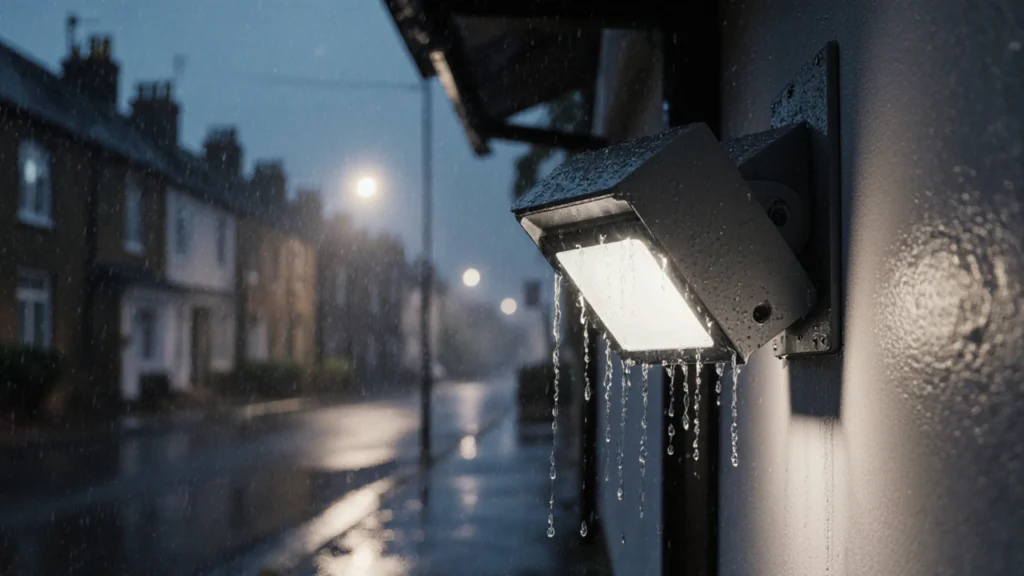
Understanding how to manage outdoor security lighting glare requires analyzing the interplay between light and architecture.
Scenario A: The Reflective Concrete Driveway
A homeowner installs a high-lumen LED floodlight over a garage. Despite pointing it down, the glare is blinding because the light reflects off the light-gray concrete driveway.
-
Management Strategy: Reduce the lumen output and use two fixtures at lower wattage from different angles to “fill” the space without a single high-intensity reflection point.
-
Secondary Effect: Lowering the angle of the light reduces the “long shadows” that could hide a person crouched behind a vehicle.
Scenario B: The Camera Washout
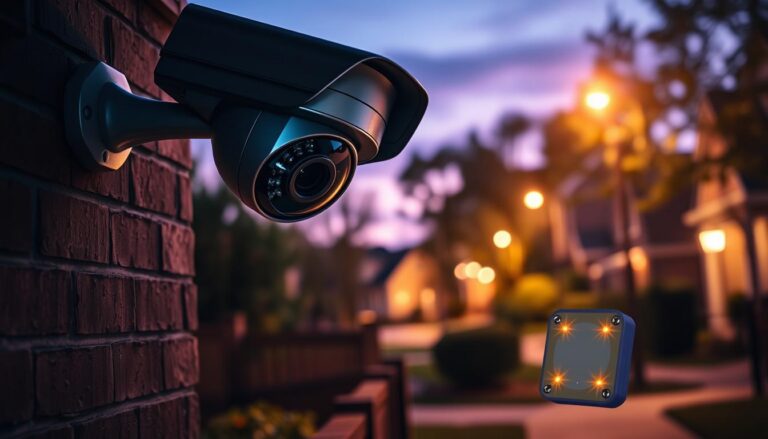
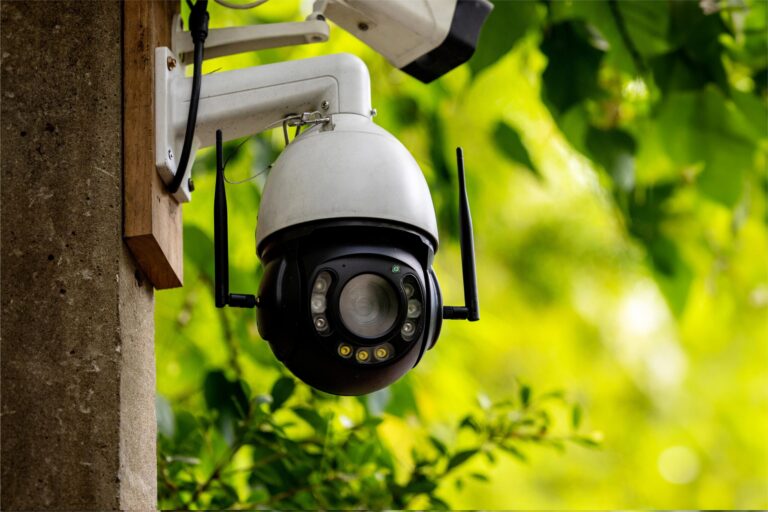
An integrated security camera with infrared (IR) capability is mounted near a visible-light security lamp. The glare from the lamp “blinds” the camera’s sensor, causing the image to appear washed out or grainy.
-
Management Strategy: Use a “shroud” on the light fixture to create a “dark zone” exactly where the camera is mounted, or sync the light to only reach 100% brightness when the camera detects motion.
-
Failure Mode: If the camera and light are too far apart, the “dark zone” may provide a path for an intruder to approach the camera and disable it.
Planning, Cost, and Resource Dynamics
Managing glare is often more a matter of intellectual labor (planning) than hardware cost.
| Cost Component | Range (Estimated) | Frequency | Impact on Glare |
| Photometric Site Plan | $500 – $2,500 | Once | Eliminates “blind spots” |
| Shielding/Louver Add-ons | $20 – $150 per unit | Once | Direct mitigation |
| Dimming Controllers | $50 – $300 | Once | Adaptive intensity |
| Maintenance (Cleaning) | $100 – $500/yr | Annual | Prevents “glow” from dust |
The “Opportunity Cost” of ignoring glare is significant. A poorly lit commercial lot with high glare is a liability; customers feel less safe because they cannot see into the shadows, and insurance providers may view the high-contrast environment as a negligence risk in the event of an incident.
Tools, Strategies, and Support Systems
-
Laser Aiming Tools: Ensuring that the “hot spot” of a beam is exactly where intended, not 5 degrees too high.
-
External Visors: Often called “barn doors,” these allow for manual adjustment of the light’s cutoff line on-site.
-
Occupancy Sensors (PIR): The ultimate glare reduction strategy is having the lights off when no one is present.
-
Matte Finishes: Painting mounting poles and nearby structures in non-reflective colors to reduce secondary bounce.
-
Smart Hubs: Using astronomical clocks to dim lights to 30% after midnight, increasing to 100% only upon trigger.
-
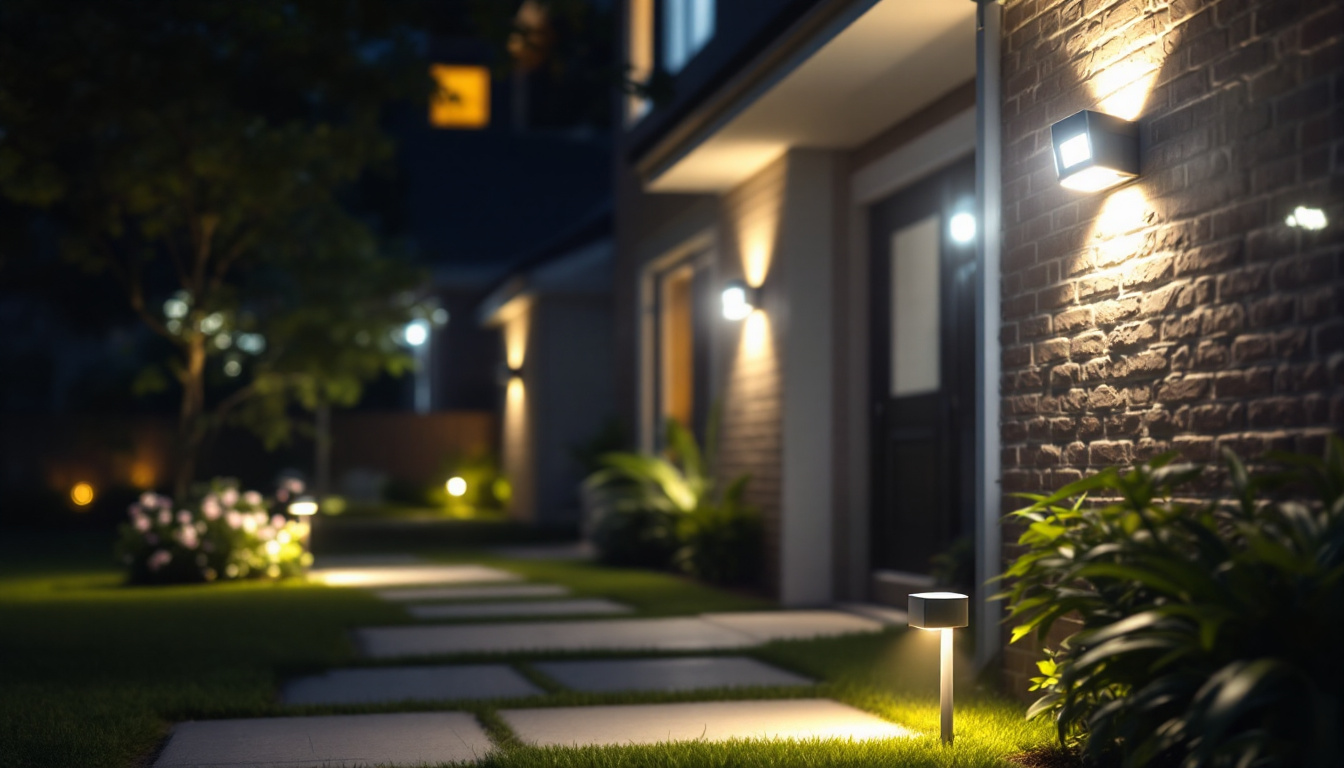
Shielded Bollards: Using ground-level lighting for paths instead of overhead “area lights.”
Risk Landscape and Failure Modes
There is a “Compounding Risk” when trying to fix glare without a plan.
-
The “Black Hole” Effect: Over-shielding a light can create such sharp cutoff lines that an intruder is completely invisible the moment they step one inch outside the beam.
-
Nuisance Shadows: High-contrast lighting creates moving shadows (e.g., trees blowing in the wind). These can trigger false positives in motion-detection software, leading to “alert fatigue.”
-
The False Sense of Security: A property owner may feel safe because the yard is “bright,” while failing to realize they are effectively blinded to anyone standing just outside the perimeter.
Governance and Maintenance
The optical performance of a security system degrades over time.
-
The Lens Audit: Plastic lenses can “yellow” or “craze” due to UV exposure, which scatters light and increases glare. These must be replaced or polished.
-
Vegetation Management: Plants grow into the beam path, creating new, unpredictable glare points and shadows. A bi-annual trim is a security requirement.
-
Trigger Calibration: Ensuring that smart dimming systems respond quickly enough to be a deterrent, but slowly enough to allow the eye to adapt to the change in light levels.
Measurement and Evaluation
-
Light Trespass Metering: Using a foot-candle meter at the property line. A reading of more than 0.1 fc at the boundary is usually a sign of poor management.
-
Contrast Ratios: Measuring the “Max-to-Min” ratio across the monitored area.
-
Visual Clarity Documentation: Taking high-dynamic-range (HDR) photos of the site at night to see where the camera’s “blind spots” are located relative to the light sources.
Common Misconceptions
-
“Higher wattage equals more safety.” Higher wattage usually just equals more glare and deeper shadows.
-
“Blue light is ‘whiter’ and clearer.” Blue light scatters more in the eye, making it harder to see details at a distance.
-
“Full-cutoff fixtures are too dim.” They are actually more efficient because they put 100% of the light on the ground rather than wasting it in the air.
-
“Motion lights don’t work as a deterrent.” The sudden change in light is actually a more effective psychological deterrent than constant “static” lighting.
Ethical and Ecological Considerations
Managing glare is also an act of environmental stewardship. Light pollution disrupts the circadian rhythms of local fauna and contributes to the loss of the night sky. By mastering how to manage outdoor security lighting glare, a property owner fulfills a “Good Neighbor” policy, ensuring that their security needs do not infringe upon the sleep quality or privacy of those around them.
Conclusion
True security is found in the nuance of the shadow, not the intensity of the flame. The mastery of outdoor lighting requires an editorial eye—the ability to “edit” out unnecessary light spill while highlighting the critical paths of travel and entry. As technology continues to move toward more adaptive and integrated systems, the most effective security postures will be those that prioritize visual comfort and precision. By applying these frameworks, one transforms a harsh, blinding environment into a safe, navigable, and strategically superior space.