How to Avoid Outdoor Security Blind Spots: A Definitive 2026 Guide
The integrity of an outdoor security perimeter is frequently undermined by a pervasive sense of false confidence. Property owners often assume that the mere presence of high-definition cameras and high-lumen floodlights equates to comprehensive coverage. In reality, security is not a binary state of “protected” or “unprotected,” but a shifting landscape of visibility and occlusion. How to Avoid Outdoor Security Blind Spots. A blind spot is more than just a gap in a camera’s field of view; it is a structural vulnerability where an adversary can operate with impunity, leveraging the environment’s own geometry and lighting against the surveillance system.
Addressing these vulnerabilities requires a transition from a hardware-centric mindset to a spatial-intelligence approach. It involves understanding how light behaves at 2:00 AM, how seasonal vegetation changes the line of sight, and how the focal length of a lens can inadvertently create “dead zones” directly beneath a camera mount. As properties become more complex and threats more sophisticated, the ability to identify and mitigate these gaps is what separates a functional security posture from a decorative one.
This editorial examination serves as a definitive reference for those seeking to engineer a surveillance environment that leaves no room for ambiguity. We will explore the physics of Field of View (FoV), the psychological traps of monitor-based observation, and the systemic frameworks required to maintain a seamless perimeter. By dissecting the nuances of “how to avoid outdoor security blind spots,” this article provides the analytical tools necessary to move beyond surface-level security and toward true situational awareness.
How to avoid outdoor security blind spots
To master how to avoid outdoor security blind spots, one must first dismantle the oversimplification that a wider lens is always better. While a wide-angle lens (e.g., 2.8mm) covers a broad horizontal plane, it often results in “barrel distortion” and a significant loss of detail at the edges. More importantly, it can create a profound vertical blind spot directly beneath the camera. A multi-perspective view of this problem involves looking at the property through the eyes of an intruder (seeking shadows), a technician (seeking mounting ease), and an analyst (seeking high-fidelity data).
A common misunderstanding in perimeter design is the “Overlapping Fallacy.” Owners believe that if Camera A can see Camera B, the space between them is secure. However, if both cameras are mounted at the same height and angled at the same degree, they may both possess a shared “under-cone” blind spot that allows an intruder to move along the wall undetected. Truly avoiding these gaps requires an asymmetrical placement strategy—varying mounting heights and using “cross-fire” angles to ensure that the blind spot of one device is the primary focal point of another.
Oversimplification risks also manifest in the failure to account for “Dynamic Obstructions.” A static site plan might show a clear line of sight across a lawn, but it fails to account for a delivery truck parked in the driveway or the growth of a deciduous tree. Mastering the perimeter means acknowledging that blind spots are not static; they are fluid entities that expand and contract based on the time of day, weather conditions, and property usage.
Deep Contextual Background: The Evolution of the Perimeter
The history of perimeter security is a narrative of moving from “Thickness” to “Vision.” In the pre-digital era, security was a matter of physical barriers—walls, fences, and moats. If there was a blind spot, it was irrelevant because the barrier itself was the deterrent. The “First Wave” of electronic security introduced CCTV, which was primarily used for “Visual Verification” of these physical barriers. Because these systems were analog and expensive, coverage was intentionally sparse, leaving vast “dead zones” that were managed through human patrols.
The “Second Wave” arrived with the democratization of IP cameras and digital storage. Suddenly, it was affordable to “flood” a property with sensors. However, this led to “Data Obesity,” where property owners had dozens of views but no coherent understanding of the gaps between them. We are currently in the “Third Wave,” characterized by “Computational Spatial Awareness.” Modern systems use 3D modeling and LiDAR to map the environment, allowing for the predictive identification of blind spots before a single camera is mounted. This evolution has shifted the focus from “adding more cameras” to “optimizing the placement logic” of existing sensors.
Conceptual Frameworks and Mental Models
Expert security architects use several mental models to analyze a site for potential occlusions.
1. The Cone of Invisibility
Every camera has a “blind cone” extending from its base to the point where its field of view hits the ground.
-
Framework: “Interlocking Fields.” Ensure that no camera is an island. Use a “chase” pattern where Camera 1 monitors the base of Camera 2, and vice versa.
-
Limit: This doubles the amount of hardware and storage required, which may not be feasible for all budgets.
2. The 3D Depth of Field (DoF)
A camera might see an object at 50 feet, but is it in focus? A blind spot can exist in the form of “Blurry Zones” where detection is possible but identification is not.
-
Framework: “Pixel Density Requirements.” Calculate the Pixels Per Foot (PPF) at the furthest point of the perimeter. If PPF drops below a certain threshold, that area is functionally a blind spot for evidentiary purposes.
-
Limit: High PPF requires narrower lenses (6mm or 8mm), which reduces the overall width of the shot.
3. The Seasonal Occlusion Model
This model accounts for the “Biological Drift” of a property.
-
Framework: “Worst-Case Foliage Analysis.” Map the perimeter during mid-summer when trees are at their fullest. If a branch creates a gap, it must be trimmed or the camera relocated.
-
Limit: Over-trimming can negatively impact property value and local ecology.
Key Categories and Technical Variations
Mitigating blind spots requires a mix of hardware types and mounting philosophies.
| Category | Methodology | Primary Trade-off | Best For |
| Panoramic / Fisheye | 180 or 360-degree views | Significant edge distortion | Large open parking lots |
| Multi-Sensor Units | 3-4 lenses in one housing | High bandwidth / High cost | Building corners |
| PTZ (Pan-Tilt-Zoom) | Active tracking | Can only look at one spot | Large estates with guards |
| Corner-Mount Brackets | 270-degree “wrapping” | Complex installation | Commercial buildings |
| Dual-Lens Splicing | Software-stitched views | Requires high processing power | Long fence lines |
| Corridor Mode | 9:16 vertical orientation | Lost horizontal context | Narrow side-yards / Alleys |
Realistic Decision Logic
When deciding on a category, the “Target Velocity” is a critical factor. For a slow-moving intruder in a narrow side-yard, “Corridor Mode” is the superior choice for avoiding blind spots. For a fast-moving vehicle in an open field, a multi-sensor unit provides the necessary “Hand-off” capabilities to ensure the target is never lost as it transitions between lens fields.
Detailed Real-World Scenarios How to Avoid Outdoor Security Blind Spots
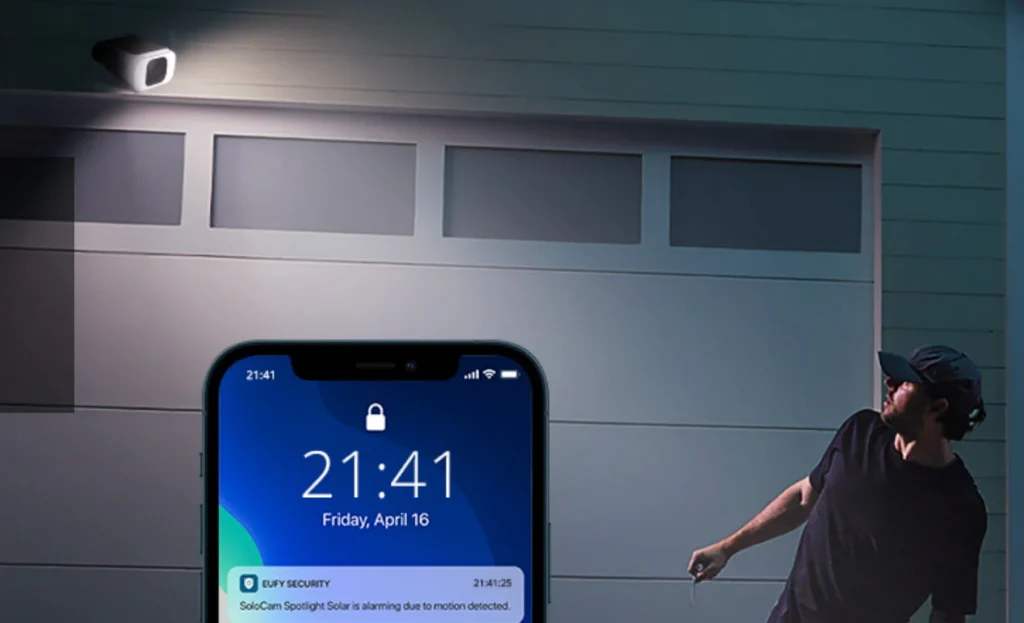
Understanding how to avoid outdoor security blind spots requires looking at how “Edge Cases” manifest in the field.
Scenario A: The Over-Elevation Blind Spot
A warehouse manager mounts a camera at 25 feet to prevent vandalism to the device. However, the steep angle creates a 15-foot blind spot along the wall directly beneath the camera.
-
Management Strategy: Install a “Wall-Hugger” camera at 10 feet with a wide-angle lens specifically to monitor the building’s foundation, using a vandal-proof “dome” housing.
-
Secondary Effect: The lower camera provides better facial recognition than the “top-down” view of the 25-foot camera.
Scenario B: The “Light-Blinded” Sensor
At night, a camera is positioned facing a gate. A nearby security light creates “Backlighting” that causes the camera’s auto-iris to close, turning everything in the foreground into a silhouette.
-
Management Strategy: Re-orient the camera so the light source is behind it, or use Wide Dynamic Range (WDR) technology to balance the exposure.
-
Failure Mode: If WDR is pushed too high, it introduces digital noise that can mask small movements in the shadows.
Planning, Cost, and Resource Dynamics
Achieving 100% coverage is an asymptotic goal—the closer you get, the more expensive each additional percentage point becomes.
| Cost Component | Range (Estimated) | Frequency | Influence on Coverage |
| LiDAR Site Survey | $1,000 – $3,500 | Once | Identifies hidden gaps |
| Additional Camera Nodes | $300 – $1,200/ea | Once | Direct gap filling |
| High-Gain IR Illuminators | $100 – $400/ea | Once | Eliminates night blind spots |
| Cloud Storage (Added) | $10 – $50/mo | Recurring | Supports more high-res feeds |
The “Opportunity Cost” of a blind spot is the potential for unmonitored lateral movement. An intruder who finds a single gap can “stitch” their way across a property, moving from one blind spot to the next, effectively rendering a 20-camera system useless.
Tools, Strategies, and Support Systems
-
FoV Calculators: Software tools that allow you to input sensor size and lens mm to see the exact coverage on a map.
-
Corner Mirrors: A low-tech but effective way to allow a camera to “see around” an obstruction without adding a second node.
-
Thermal Imaging: Crucial for avoiding blind spots in heavy rain, fog, or total darkness where optical sensors fail.
-
Height-Adjustable Poles: Allowing for the fine-tuning of angles to eliminate the “Under-Cone” gap.
-
Reflective Surfaces Analysis: Using the natural bounce of light to illuminate shadowed “dead zones.”
-
Edge AI Person Detection: Ensuring the system alerts you the moment someone enters a peripheral “low-resolution” zone.
Risk Landscape and Failure Modes
There is a “Compounding Risk” when coverage is too symmetrical.
-
The “Blind-by-Design” Flaw: If all cameras are mounted at the same height, an intruder can use a single tall vehicle or obstacle to block multiple views simultaneously.
-
The “Maintenance Gap”: A spider web over a lens or a dirty housing doesn’t just reduce quality; it creates a functional blind spot that can last for weeks if not cleaned.
-
Storage Throttling: If a system is overwhelmed by data from too many cameras, it may drop frames, creating “Temporal Blind Spots” where an event happens between the frames of a recording.
Governance, Maintenance, and Long-Term Adaptation
A perimeter is a living entity that requires constant “Re-Validation.”
-
The Quarterly Walk-Through: A security professional should walk the perimeter with a tablet, viewing the live feeds while physically standing in various locations to identify new gaps.
-
The “Dynamic Object” Audit: Assessing if new property additions (sheds, dumpsters, play equipment) have created “Occlusion Islands.”
-
Firmware Lifecycle Management: Ensuring that digital zoom and AI-masking features haven’t “drifted” over time due to software updates.
Layered Checklist for Coverage Health
-
Weekly: Check for “Blocked View” alerts in the NVR software.
-
Monthly: Clean camera domes to prevent light refraction glare.
-
Seasonally: Adjust camera angles for leaf-on/leaf-off transitions.
Measurement, Tracking, and Evaluation
-
The “Target Tracking” Metric: Can a person walk from the street to the front door without ever disappearing from view for more than 1 second?
-
PPF Mapping: A heat-map of the property showing where the “Identification-Grade” pixels end and the “Detection-Grade” pixels begin.
-
Documentation Example: “Blind Spot Inventory”—a document that explicitly lists the known gaps in a system so that human patrols or secondary sensors can compensate for them.
Common Misconceptions
-
“Wide-angle lenses solve everything.” They often create more blind spots than they solve due to vertical clipping and distortion.
-
“High resolution fixes distance.” 4K resolution cannot compensate for a lens that is physically out of focus or improperly aimed.
-
“PTZ cameras are the ultimate solution.” If a PTZ is looking at the gate, it is 100% blind to the back door. Fixed cameras are the backbone of gap-free security.
-
“Night vision has no blind spots.” IR illuminators have a “throw” distance. Anything beyond 60-100 feet is effectively a blind spot in total darkness.
Ethical and Contextual Considerations
Eliminating blind spots can inadvertently lead to “Privacy Intrusion.” A camera angled to avoid a gap at a fence line might be peering directly into a neighbor’s window. Mastering how to avoid outdoor security blind spots must include the use of “Privacy Masking”—a software feature that blacks out specific sensitive areas in the camera’s view while still monitoring the ground around them.
Conclusion
A seamless security perimeter is not achieved through the sheer volume of technology, but through the intellectual rigor of its arrangement. Understanding the geometry of sightlines, the physics of light, and the fluid nature of property environments is essential. A blind spot is a silent failure, often only discovered when it is too late. By adopting an asymmetrical, interlocking, and dynamic approach to surveillance, a property owner can transform a fragmented collection of views into a cohesive, impenetrable shield.